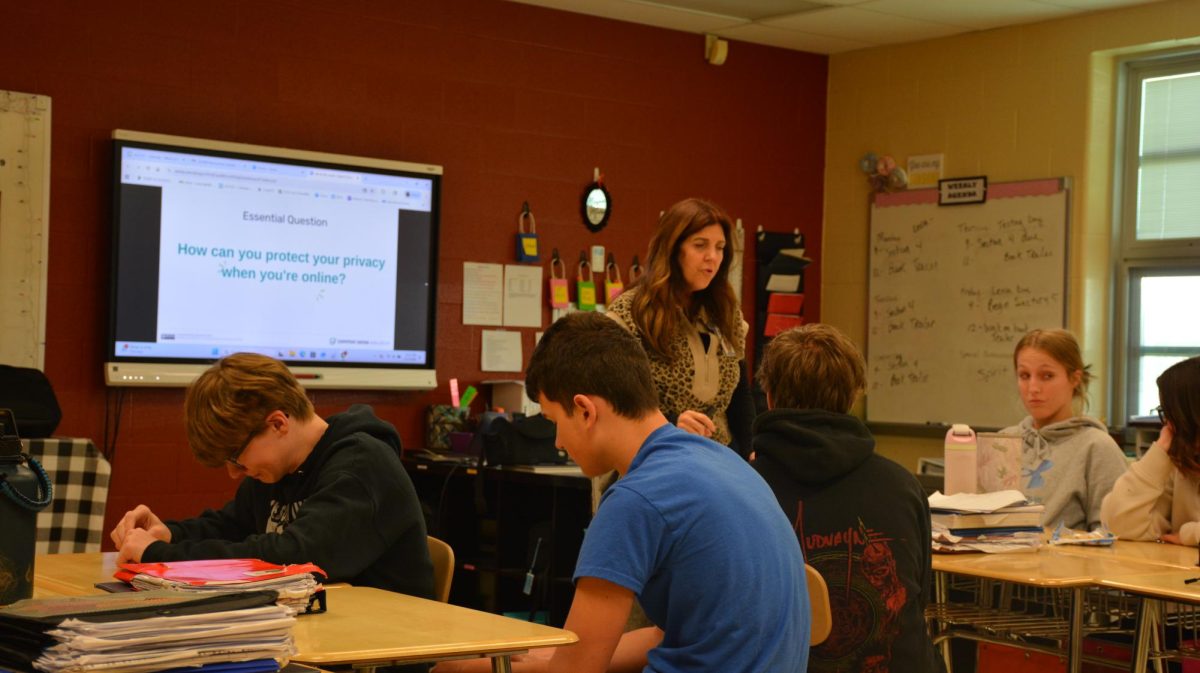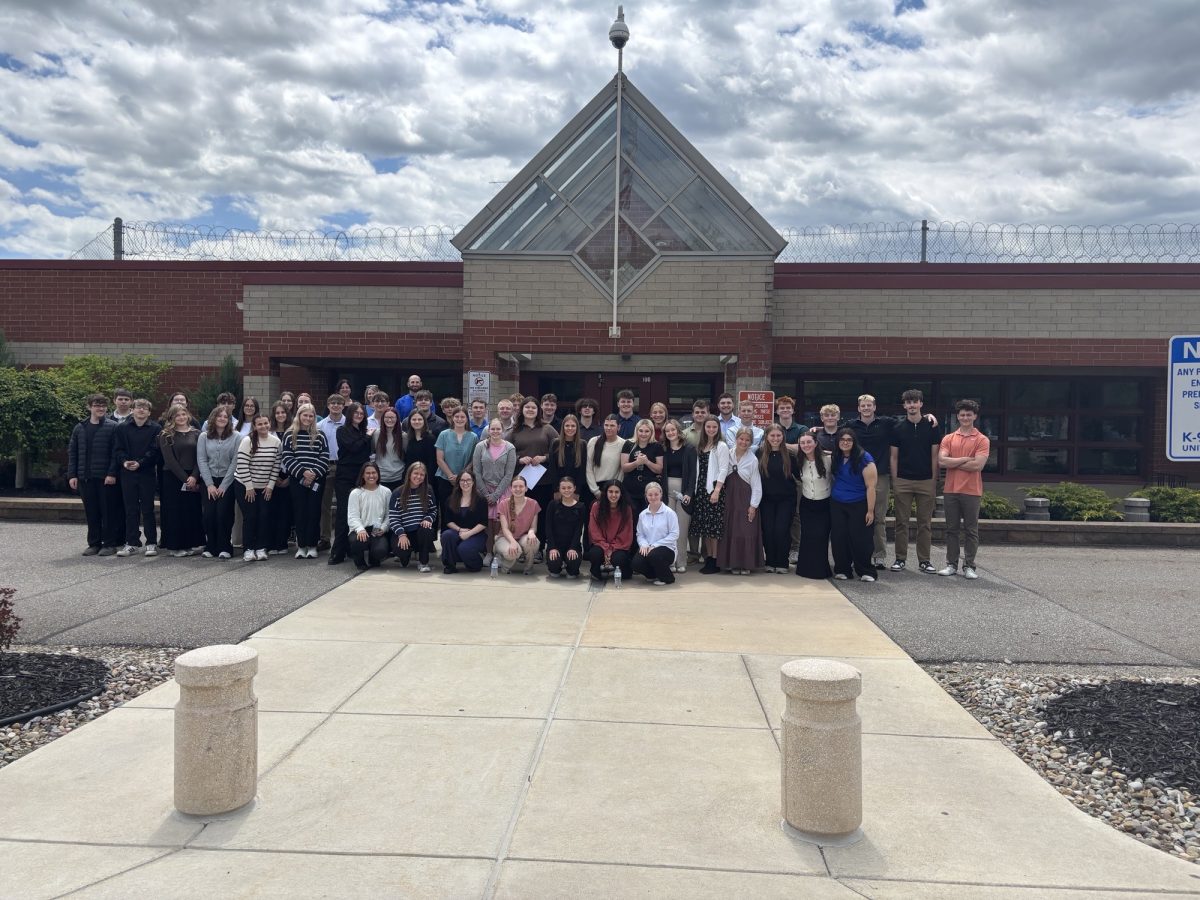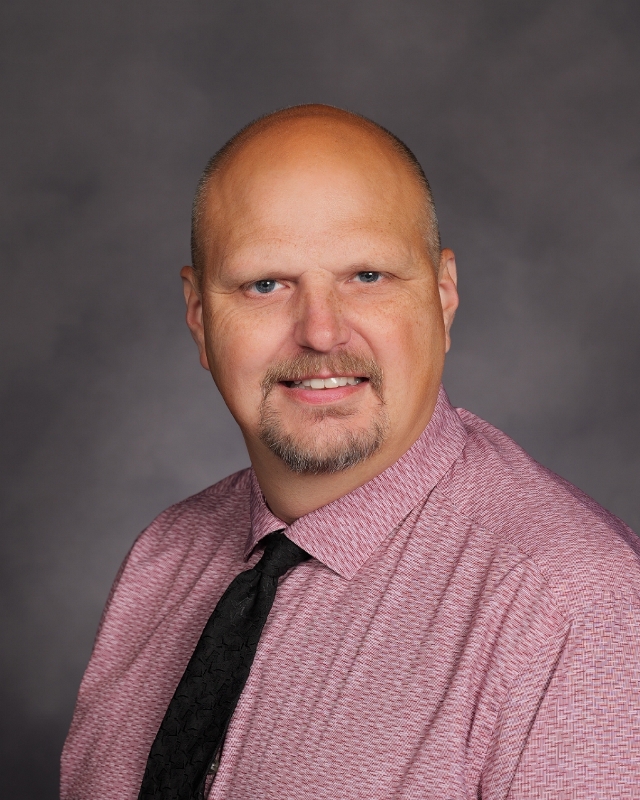
Mr. Mohr instructs the course and 30 students total go to his class. He has two classes for drones. 7th period has 8 and his 8th period has 22.
How you control drones is by using a combination of a remote controller (transmitter) and an onboard flight controller, which is essentially the drone’s “brain.” The pilot sends instructions via a remote controller to the flight controller. For modern event drones (especially drone light shows), the flight is often pre-programmed and fully autonomous, with the pilot providing fleet-wide commands (like start, stop, or land) while the on-board systems (GPS, gyroscopes, accelerometers, etc.) execute the complex flight path and formations automatically.
How it Spins (Yaw): A drone spins (or yaws) by precisely adjusting the speed of its propellers. In a standard quadcopter:
- Two propellers spin clockwise and two spin counterclockwise to balance out the rotational forces (torque) and maintain the drone’s stability.
- To make the drone spin left (yaw left), the flight controller will slightly slow down the propellers spinning clockwise and speed up the ones spinning counterclockwise.
- To make the drone spin right (yaw right), the process is reversed.
We need Drones events like games. They offer unique benefits for both logistics and security, as well as entertainment, at large-scale public events and sporting games.
The reason we need drones for events is for security & crowd control, you use drones to provide a real-time, comprehensive aerial view of the venue and surrounding areas.
For example, Monitoring for disturbances, identifying unauthorized perimeter breaches, and guiding emergency responders during evacuations. For Media & Cinematography you capture dynamic, high-definition aerial footage and unique camera angles that ground cameras cannot achieve. For example, Tracking a player’s movement on a field, capturing the scale of a stadium, or getting a fly-through shot of an event. For Entertainment you create spectacular drone light shows with complex, synchronized aerial formations. For example, Replacing traditional fireworks displays or creating a captivating visual narrative for opening ceremonies. For Logistics you Assist in pre-event planning and post-event analysis. For example, you create 3D maps of the venue for optimal setup and assessing field conditions.
The requirements for his class is to fly a drone for commercial purposes (like an event or game) in the US, you generally need to obtain a Remote Pilot Certificate under the FAA’s Small UAS Rule (Part 107). A drone class typically covers the knowledge required to pass the certification exam. Essential Knowledge for a Drone Class Our drones class (Part 107 prep course) will focus on several key areas of aeronautical knowledge:- FAA Regulations (Part 107): The rules for commercial drone operations, including altitude limits, speed restrictions, and required anti-collision lights for night flight.- Airspace Classification: Understanding different airspace types (e.g., Class B, C, D, E, and G) and what authorization is needed to fly in them. Aviation Weather: Learning to read and interpret weather reports (like METARs and TAFs) and understanding how weather phenomena (wind, temperature, density altitude) affect drone performance.- Small UAS Loading and Performance: Knowing how weight and balance affect a drone’s flight characteristics and battery life. Emergency Procedures: What to do in case of a flyaway, loss of link, or other in-flight emergencies. Aeronautical Decision-Making (ADM): Learning to manage risk and make safe choices during flight operations. Key Requirements for Commercial Operation The formal requirements for obtaining the Part 107 Remote Pilot Certificate include: Age and Language: Be at least 16 years old and be able to read, speak, write, and understand English. Knowledge Test: Pass the initial FAA aeronautical knowledge exam (“Unmanned Aircraft General – Small (UAG)”) at an FAA-approved testing center. Vetting: Pass a Transportation Security Administration (TSA) security background check. Recurrent Training: Complete an online recurrent training course every 24 calendar months to keep the certificate current.
According to Mr. Mohr is has a quote, “Jackson-Milton Drones is working on the Future, Focused From Above”
The requirements for drones is being able to listen to the information that you’re given.
When you get all the information you should know beforehand is that if you pass the test at the end you will get a certificate which will help you get a job. And that job you would use the drone to look at the roof of a building to check for water damage.
Where they practice drones outside to get more information on how to control a drone.
Mr. Mohr is the one who is helping them with the drones. If they make a mistake they will get help and guidance If needed.